
Looking Ahead
Talnotry
2026
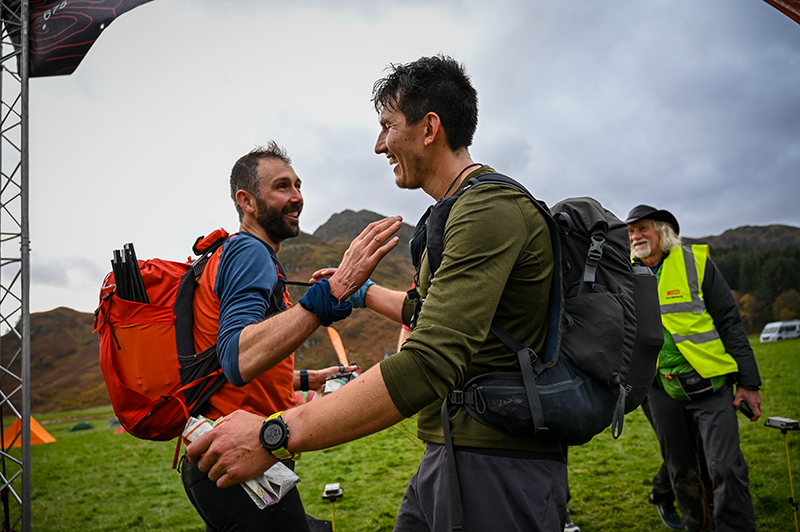 From the OMM archive
Back to Galloway
Every ten years, the OMM finds its way back to Galloway. It's been that way since our first visit in 1976, and this October we're keeping the tradition going with the 57th OMM at Talnotry.
It's a particularly fitting year to return, marking fifty years since our first visit to Galloway, and twenty years since the KIMM became the OMM.
This year's event takes us to a quieter corner of southwest Scotland, along the Queen's Way between Newton Stewart and New Galloway.
Talnotry is perhaps best known for Grey Mare's Tail waterfall and Murray's Monument, which stands above the surrounding forest. There's also The Quorum, a collection of carved stone faces hidden among the walls of old sheep pens, part of Galloway Forest Park's outdoor art programme.
It's not one of Scotland's better-known mountain destinations, but there's some surprisingly rugged country in this part of the Southern Uplands. Those who've spent time in the Galloway Hills will know there's rather more to them than their modest altitude might suggest.
Before we get into this year's entries, here's a little more about the area we're returning to.
A landscape of forests and hills
One of the most noticeable features of this part of Galloway is the contrast between the extensive forestry and the hills beyond it.
Talnotry sits within Galloway Forest Park, Britain's largest forest park, covering more than 300 square miles. In 2009, it also became the UK's first International Dark Sky Park, recognised for its exceptionally low levels of light pollution. On a clear night, thousands of stars can be seen with the naked eye, with the Milky Way often visible overhead.
Commercial forestry occupies much of the lower ground, while elsewhere in the wider region there are open hills, exposed rock, heather moorland and scattered lochs.
The geology has a lot to do with the landscape. Granite intrusions, older sedimentary rocks and successive periods of glaciation have helped shape the hills and valleys. Some of the uplands are broad and rounded; other areas are much more broken, with steep slopes and rocky outcrops.
It's quite a varied part of Scotland, and one that deserves a little more attention than it gets. Although those who enjoy having the hills to themselves might disagree.
What to expect from Galloway
The height of Galloway's hills doesn't necessarily tell you much about the ground itself.
Across the wider uplands, rough grassland, heather, peatland and exposed rock are all common. Galloway's wet climate and areas of poorly drained ground have allowed blanket bog to develop, while glacial erosion has left a mixture of rounded slopes and more irregular, rocky terrain.
The hills around the Merrick and Rhinns of Kells are good examples of the latter, with rocky outcrops, steep-sided slopes and small lochs scattered across the uplands.
Two stretches of ground might look much the same on a map, but differences in vegetation, drainage and surface conditions can make them quite different to travel across.
Those more familiar with the well-used paths of the Lakes or the grassy hills of the Howgills may find parts of the wider Galloway uplands rather less accommodating.
There's a considerable difference between running quickly and moving efficiently over difficult ground. It's a distinction anyone who's spent time on rough Scottish hills will recognise, usually after learning it the hard way at least once.
Fifty years of the OMM in Galloway
We've visited Galloway five times previously: 1976, 1986, 1996, 2006 and 2016.
The first visit in 1976 remains one of the more notorious events in KIMM history. Exceptionally poor weather saw only around 30% of competitors complete the event.
When questioned by the BBC about whether the event had been too tough, organiser Gerry Charnley replied:
"Everybody knows this is the KIMM, the toughest event on the calendar and it's not a Sunday afternoon picnic."
It's a quote that's aged rather well. Although we'll refrain from making any comparisons with this year's forecast just yet.
We returned to the Galloway Hills in 1986, Galloway Forest in 1996 and Galloway Forest Park in 2006.
The 2006 edition also marked the change from the Karrimor International Mountain Marathon to the Original Mountain Marathon.
Our most recent visit was to Glentrool in 2016. Now, fifty years after that first event, we're back for another October weekend in Galloway.
The teams
to watch.
Looking through this year's entries, there are plenty of familiar names, a number of last year's leading teams and some new pairings with good results behind them.
Of course, anyone who's followed the OMM for long enough will know that the entry list and the final results don't always bear much resemblance to one another. But that's half the interest in looking ahead.
Here's who we’ll be keeping an eye on across the six courses.
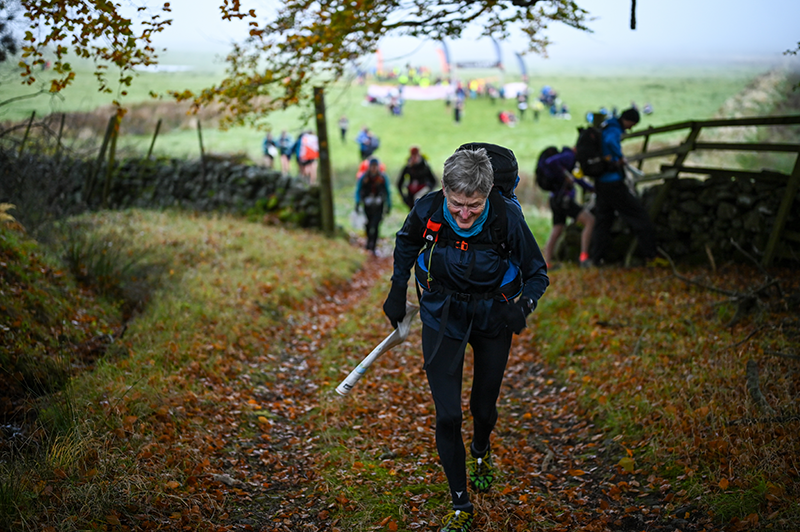
Elite
Felix Wilson and Dan Ashwood return as defending champions after winning last year's Elite at Shap Abbey in 11:53:45.
They came close the year before, finishing just 1 minute 44 seconds behind Philip Rutter and Finlay Wild in 2024. Two podiums in two years, including a win, make them one of the more obvious teams to watch.
Rutter is back alongside Sam Dixon, with whom he won Elite in both 2022 and 2023. They'll be looking to pick up where they left off, although Wilson and Ashwood may have something to say about that.
The rest of last year's podium is also accounted for, with Csoban Balogh and Aidan Smith returning after finishing third. Alistair Masson and Tim Morgan have been steadily moving up the results too, finishing sixth in 2024 and fifth last year.
Joe Woodley and Tom Saville could also feature. Woodley won A last year with Dane Blomquist, while Saville finished fourth on Elite with Oli Johnson.
In the women's competition, Despina Berdeni and Lisa Watson return as defending champions and one of the most established partnerships on the Elite course. The Dark Peak Fell Runners pair also took the women's title in 2023, finishing 11th overall, and were runners-up in 2024. With two wins and a second place in their last three appearances together, they've been remarkably consistent at the sharp end of the women's competition.
Naomi Lang and Sasha Chepelin are another pairing to look out for. Lang won women's Elite in 2024 alongside Catriona Graves, while Chepelin finished third overall that year with Jamie Paterson.
Lang has had an excellent year across both fell and trail running. In May, she broke Jasmin Paris's long-standing women's Isle of Jura Fell Race record, running 3:38:02 and taking 41 seconds off the previous mark. She's also been competing internationally in the Golden Trail World Series, including a third-place finish at Pitz Alpine, before taking second in the women's OCC at UTMB Mont-Blanc in August, missing out on victory by just three seconds after more than six hours of racing. Quite a season to bring into this year's OMM.
A Course
There's a good mixture of established mountain marathon competitors and younger orienteers on this year's A course.
Matt Harmon and Leo Hawthorne both have Elite experience, with Harmon finishing eighth in 2024. Tim Street and Jon Street also return, having finished ninth on A last year.
Georgia Ledingham and Rachel Brown are stepping up after winning women's B in 2024, when they were also third overall. Felix Watts and Guy Ward make the same move, having finished fifth on B that year.
The younger orienteers are worth a mention here.
Finlay McLuckie, who is running with Ruari Cottier, represented Great Britain at the Junior World Orienteering Championships this summer and was selected for the Junior European Cup in October.
Michael Bishenden, partnered by Adam Barrie, was also selected for the Junior European Cup. At January's Edinburgh Big Weekend Classic, McLuckie, Bishenden and Barrie finished first, fifth and second respectively on the Brown course.
There's some serious orienteering ability among the younger entries. They'll have rather more kit to carry than they're accustomed to, but the navigation credentials are certainly there.
In mixed A, Jonny Brattle and Kirsty Webb return after finishing second last year. They won mixed B in 2024, so they've already shown they can perform together across both courses.
B Course
Jonas and Yann Newey finished fourth overall on the B course in 2024 and are among the better-placed returning teams.
Johannes Gausden and Jonathan Price were tenth last year and will be looking to move further up the results.
There's also a young women's pairing in Scarlett and Esme Kelly.
Scarlett has represented Great Britain in junior orienteering and was selected for this year's Junior European Cup team. She was also first reserve for the Junior World Orienteering Championships earlier in the season.
She's competed at the OMM before, finishing second mixed on B in 2024 alongside Chris Kelly.
Jenny Lea and Ellis Maguire return following third place in women's B last year, while Greg and Pauline May finished third mixed.
Among the veterans, two names needing little introduction are Wendy Dodds and Sarah Rowell, who finished second in 2024. This year looks set to mark a remarkable milestone for Wendy, with Talnotry potentially being her 50th OMM. Her history with the event stretches right back to 1972, when she was part of the first women's team to complete the KIMM. Sarah's career is no less distinguished, including the 1984 Olympic marathon, a British marathon record and multiple national fell running titles. Quite a bit of running history between them.
Rowena Browne and Karen Nash also return, having finished third veterans in 2024.
Long Score
There's quite a bit of depth to the Long Score entry this year, with several teams who have already performed well on the course.
Tim Patterson and Rob Patterson finished second overall at Shap Abbey in 2025, with Andrew Higgins and Mark Clarkson third on the same points total. Both teams are back this year, so it'll be interesting to see how they fare against one another.
James Lowe and Simon Mills are also worth keeping an eye on. Lowe has several Long Score podium finishes, including third in 2024, while Mills has previously finished inside the top ten on Elite.
Jasmin Paris and Konrad Rawlik return after finishing second overall and first mixed in 2024.
Paris's achievements elsewhere are fairly well documented by now. She won the Spine Race outright in 2019 and became the first woman to finish the Barkley Marathons. More recently, she finished second woman at the Swiss Alps 100-mile race in August.
Tim Culshaw and Alice Willson also have a good record as a partnership, winning mixed A in 2024 before taking the mixed Long Score title last year.
The women's competition has some familiar names returning.
Claire Gordon and Sarah Crawford won last year and will be defending their title against a field that includes Nicky Spinks and Emma Stuart, who finished second in 2025.
Spinks, well known for her record-breaking double Bob Graham, Paddy Buckley and Ramsay rounds, has continued racing successfully alongside Stuart. The pair won the Bruce's Crown Race in April this year, while Spinks also finished second woman at the Winter Spine Challenger North in January.
Another team moving up is Natalie Hawkrigg and Rose Singleton. They won Short Score overall in 2024, women's Medium Score in 2025 and are now entered on Long Score.
That's three successive years on three different Score courses, with wins on the first two. They've certainly not been content to stay on the same course.
Medium Score
There's not been much between some of the returning Medium Score teams in recent years.
Andrew and Doug Stimson were third overall last year. Andrew also won Medium Score in 2024 with Thomas Dutton.
Pat Bartlett and Ben Stansfield finished fourth in 2025, just two points behind the Stimsons, while John Tullie and Kenny Short were fifth overall and second veterans.
Alastair Graves and Ben McDonnell are a new combination worth watching. Graves finished seventh on Elite last year with a different partner, while McDonnell has plenty of Medium Score experience.
Damian Hall also returns to the OMM, this time alongside Ellie Glennie. A previous competitor on both the Elite and A courses, Hall's many accolades include winning the 2023 Spine Race, finishing fifth at UTMB and, more recently, winning both the Northern Traverse and Lakeland 100 in 2025.
In the women's competition, Jill Plummer and Molly Gorman return after finishing third in 2024.
Short Score
Short Score looks harder to call from previous results, although there are a few returning teams with podium finishes.
Barry McElearney and Keith Masson were second overall last year, while Steve Baker and Andy Reed finished third in 2024.
Katrina and Graham Hemingway have international youth orienteering and mountain running experience, while Amy and Rory Sarkies bring backgrounds in both endurance running and orienteering.
Among the veterans, Richard Townsend and Mike Pannell finished third in 2024.
Dervla Ireland and Lauren Crisp are also returning, having finished fifth in the women's Short Score last year.
There's less to go on here than with some of the other courses — which usually means we'll have missed someone who's going to make us look rather foolish by Sunday afternoon.
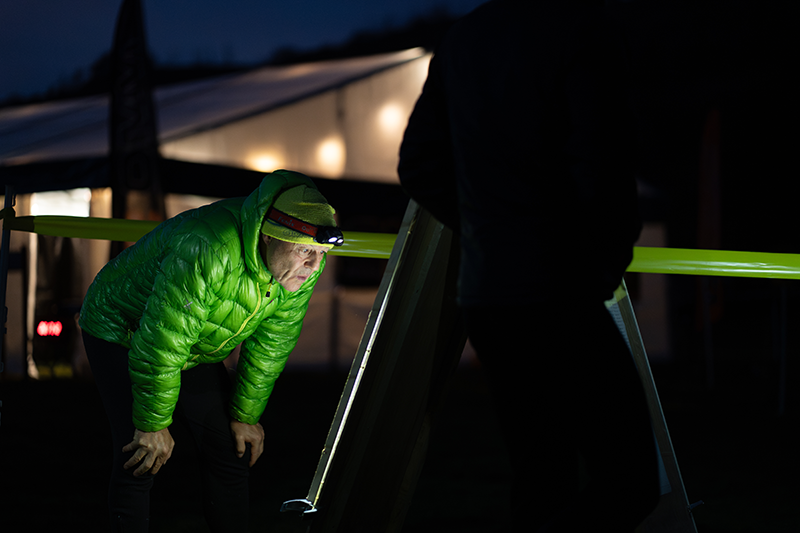
Watch it unfold.
We've picked out a few teams to watch, but there'll be plenty more going on across the hills. Follow the action over both days, see how the leading teams are getting on and keep an eye on friends and family taking part.
Tracking links for each course will be available through the official 2026 event hub as they're released, with results and photographs to follow.
Follow the OMM 2026