Twenty-four hours, one simple rule: keep moving. In the inaugural Grasmere 24hr Ultra, Sarah Gerrish embraced the highs, lows and sleep-deprived challenges of racing through the night to claim the solo victory. From tactical pacing to the magic of dawn in the Lakes, this is the story of a memorable weekend around Grasmere.
For many people, the OMM is unlike anything they’ve done before. It’s not just a running event, and it’s not simply a case of being fit enough to cover the distance. You’re carrying your own kit, navigating across the hills, looking after yourself for two days and making decisions when you’re already tired.
That’s what makes it such a rewarding challenge, but it also means your training needs to reflect the demands of the event.
You don’t need to become an elite mountain runner before entering the OMM. What you do need is to prepare for the things that make it unique. The more closely your training resembles race day, the more confident you’ll feel when you find yourself out on the hill with a map in one hand and a rucksack on your back.
Train as a team
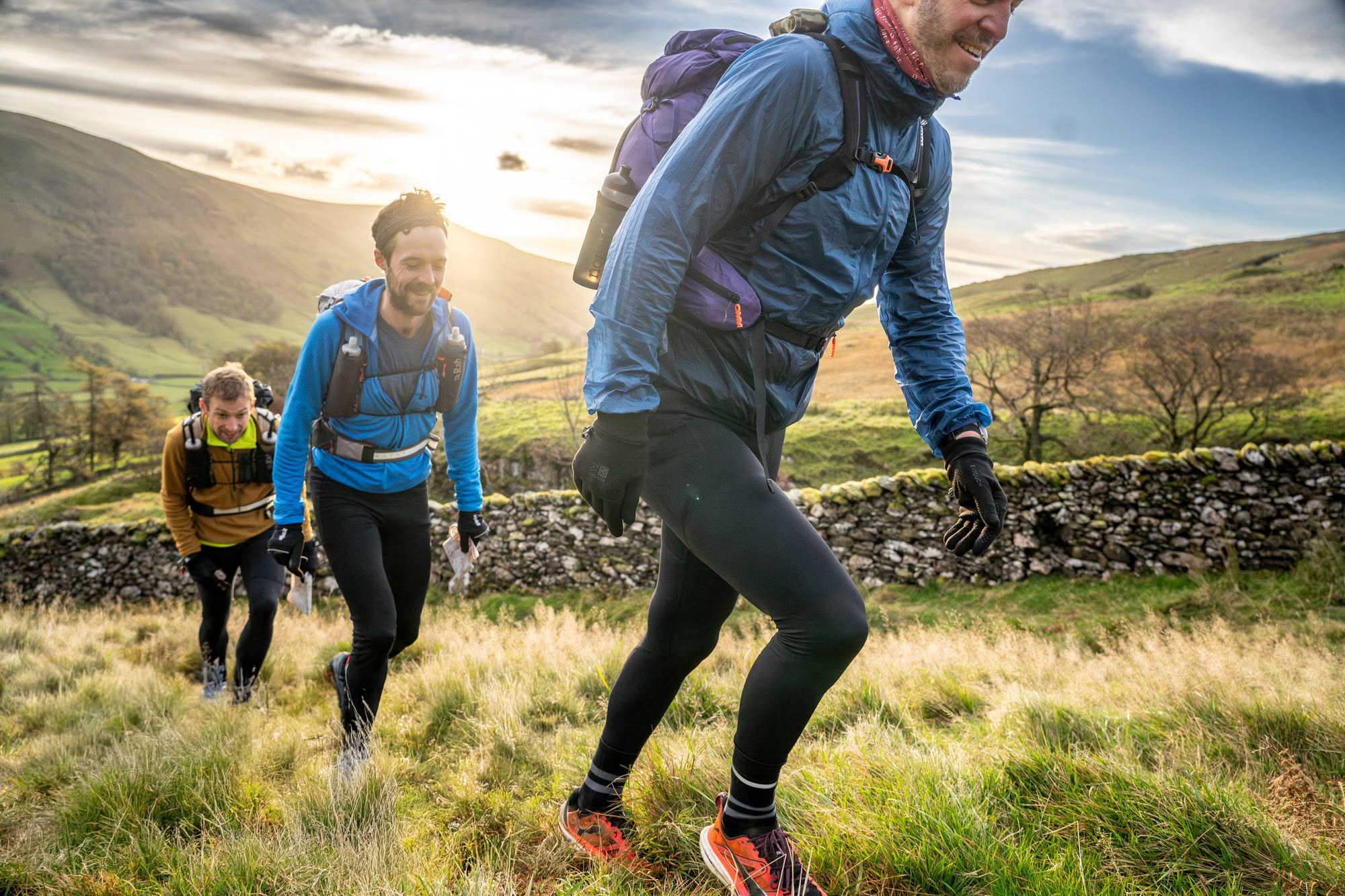
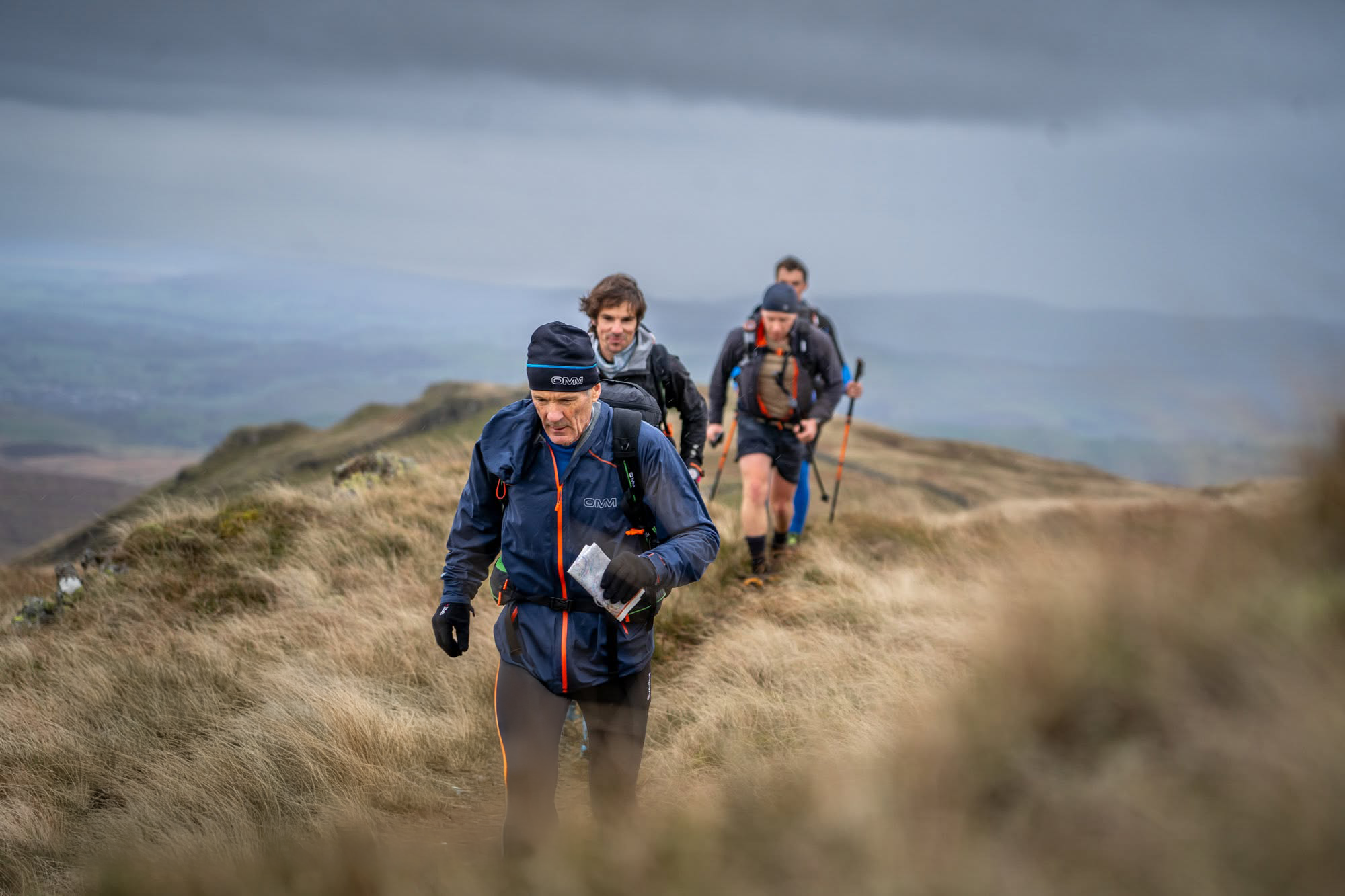
One of the biggest differences between the OMM and most other running events is that you’ll be tackling it as a pair.
Running together sounds simple enough, but it’s worth spending plenty of time training alongside your partner before race weekend. You’ll quickly learn how each other moves over different terrain, who naturally sets the pace on the climbs and how you communicate when you’re both getting tired.
It’s also a good opportunity to practise the practical side of racing together. Think about how you’ll organise your kit between you so that everything you need during the day is easy to access. A simple example is nutrition. Rather than each runner carrying their own food, pack your bags so your partner can easily reach their nutrition from your pack, and vice-versa while you’re both moving. That way, instead of stopping to access your own nutrition, you can simply grab it from their pack without either of you stopping or taking your rucksack off. The same goes for putting on or taking off extra layers. It might seem like a small detail, but staying on top of your fuelling and clothing becomes much easier when you’ve built it into the way you work together. The same applies to anything else you may need regularly throughout the day, such as poles or spare gloves, which are worth packing where they’re quick and easy to reach.
Training together also helps you settle on a realistic pace. On race day, there’s very little point in one runner constantly waiting for the other. Finding a rhythm that works for both of you is far more valuable than discovering who’s strongest halfway through a training run.
Build your training around the demands of two days
A mountain marathon isn’t simply one long race. It’s two demanding days with an overnight camp in between, and your training should reflect that.
Back-to-back long runs are one of the best ways to prepare. They don’t need to be huge every weekend, but occasionally running for several hours on Saturday before heading back out on Sunday teaches your body to keep moving while carrying accumulated fatigue.
You can even use each day slightly differently. One run might focus on sustained climbing and descending, while the second takes in rougher terrain where you’re constantly adjusting your footing. Not only does this prepare you physically, but it also gives you a chance to practise recovering overnight, eating well and starting again the following morning.
There are mental benefits too. Most people have never deliberately started a long run on tired legs, so it can feel uncomfortable the first few times. By introducing back-to-back training days, you learn that feeling a little stiff or fatigued doesn’t necessarily mean you’re incapable of performing well. It gives you confidence that when you wake up in the tent on day two feeling less than fresh, you’re experiencing exactly what you’ve already rehearsed in training. That familiarity can remove a lot of unnecessary doubt on race weekend.
Think about time on your feet, not just miles
Runners often judge a training run by how many miles they’ve covered. For the OMM, the amount of time you’re moving is often far more relevant.
A four-hour outing over rough ground with plenty of climbing can be considerably more demanding than a much longer run on flat roads and trails. Steep climbs will often be walked, technical descents require concentration and navigation naturally slows your progress.
Don’t worry if your average pace looks slower than usual. The aim is to prepare for the time you’ll spend on your feet during the event, not chase a particular pace on your watch.
Train on the terrain you’ll actually race on
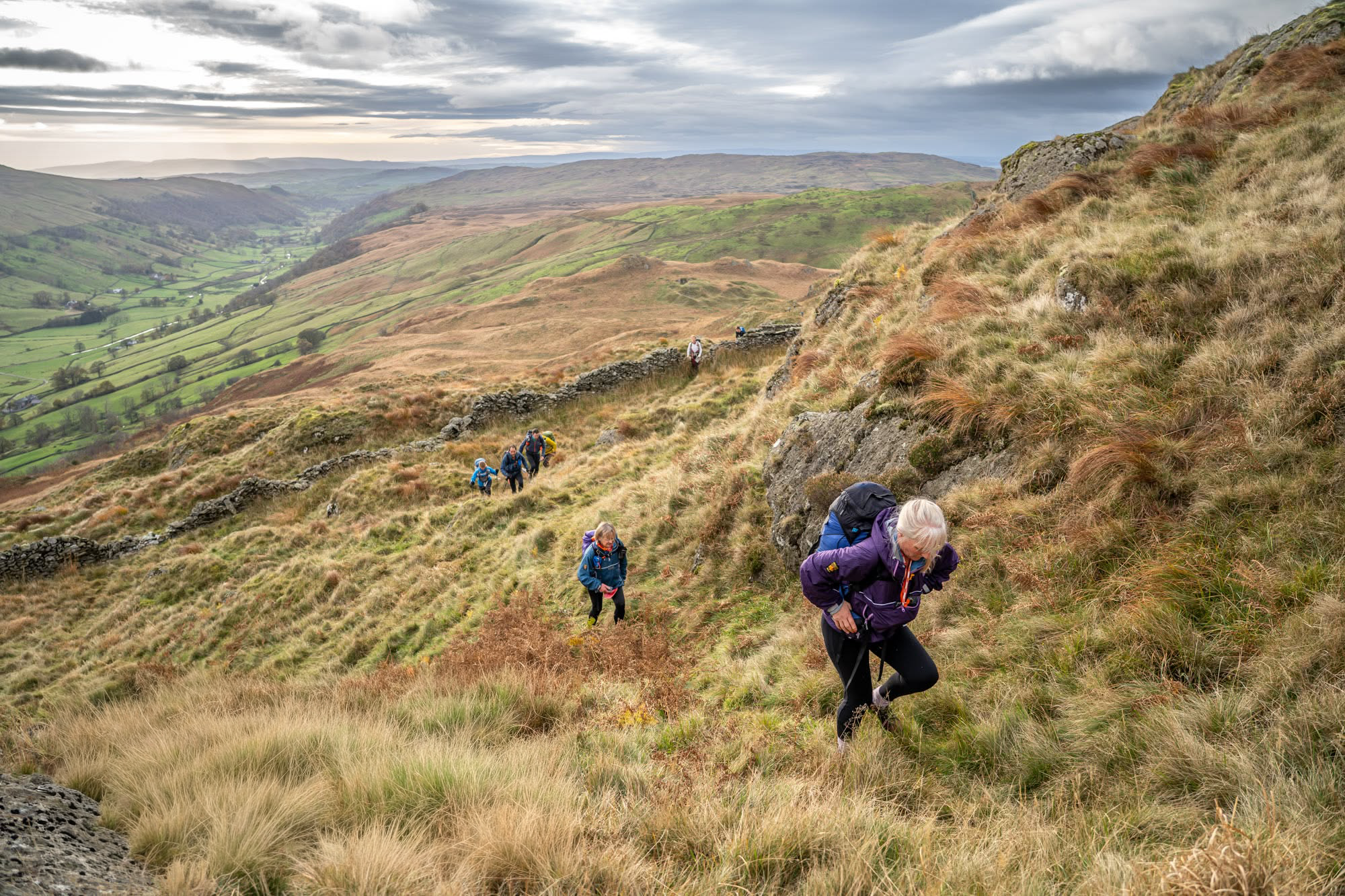
Fitness is only part of the picture. Being conditioned to moving efficiently across rough ground can make just as much difference.
Bogs, tussocks, running through ferns, side slopes and loose rock all ask different questions of your body. Every uneven step requires dozens of small adjustments through your feet, ankles, knees and hips to keep you balanced. Those constant corrections rely on stabilising muscles, tendons and your nervous system working together efficiently. The more often you expose your body to this type of terrain, the better it becomes at making those adjustments automatically.
That’s why someone who’s generally fitter isn’t always the fastest mountain runner. A runner with a larger aerobic engine may produce more power, but if every step on rough ground costs them slightly, or a lot more energy because they’re fighting for balance, over-striding or constantly braking, those small inefficiencies soon add up. Meanwhile, someone who has spent years moving across technical terrain will often use less energy with every foot placement, leaving them feeling stronger after several hours on the hill despite being, on paper, the less fit athlete.
If you’re preparing for the OMM this year in Talnotry, Scotland, seek out similar terrain wherever possible. The closer your training resembles race day, the fewer surprises you’ll face.

Don’t leave navigation until the final few weeks
It’s easy to think of navigation as something separate from your running, but in reality, the two should go hand in hand.
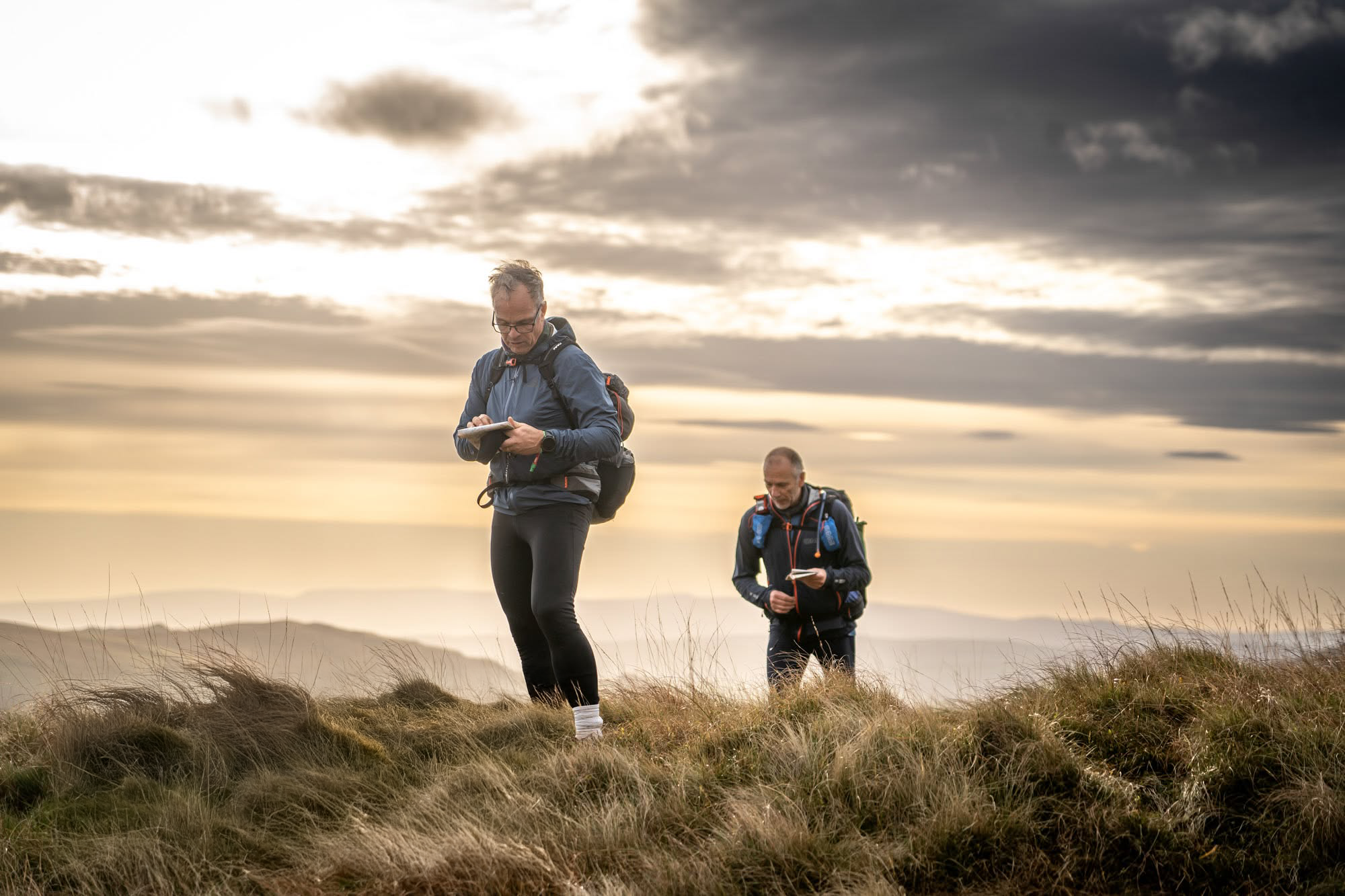
One of the best ways to practise is by adding navigation onto the end of your long runs. After two or three hours on your feet, your concentration isn’t quite as sharp and your decision making starts to slow down. That’s much closer to how you’ll feel during the event than if you’re heading out fresh for an hour with a map.
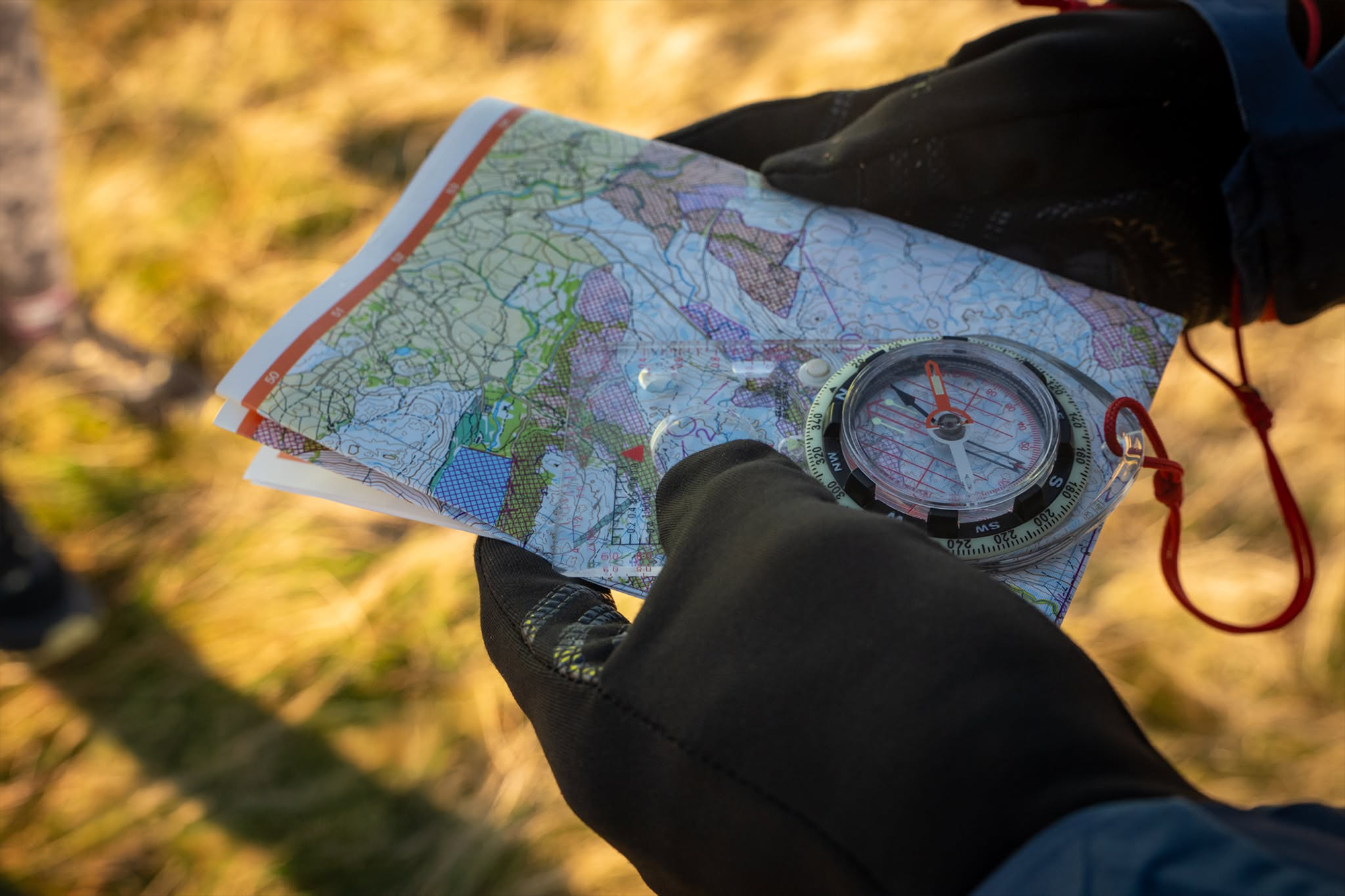
Try leaving the GPS watch behind from time to time and rely on your map and compass instead. Learn to read the shape of the land, recognise catching features and relocate yourself if things don’t quite go to plan. Making the occasional mistake during training is far better than making one during the race.
Always remember to carry your phone with you in case of emergencies, and to fall back on in case things go overly array…
Learn to move efficiently
Success in a mountain marathon isn’t always about moving faster. More often, it’s about wasting less energy.
That might mean shortening your stride on steep climbs instead of forcing the pace, hiking efficiently when walking becomes quicker than running, or relaxing on descents rather than braking with every step.
Small improvements in efficiency soon add up over two days. The more comfortable you become moving through different terrain, the less energy you’ll spend fighting against it.
Train with the pack you’ll race with
Race day shouldn’t be the first time you put your full kit into your rucksack.
As your event gets closer, start introducing your pack on longer training runs and gradually build up to carrying your full mandatory kit. Not because it’s particularly heavy, but because even a relatively light load changes how you move over technical ground.
It’s also worth experimenting with how you pack it. Waterproofs should be easy to reach when the weather changes, while food and drinks need to be accessible without having to unpack half your bag every time you want to eat.
Packs such as the OMM Phantom 25 and the Classic 25 have been designed specifically with mountain marathons in mind. Its close-fitting design keeps the load stable over rough ground, reducing unnecessary movement while you run. Combined with accessible storage, it allows you to eat, drink and retrieve essential kit without constantly stopping to take your pack off. Over two long days, those small efficiencies can make a big difference.
Prepare for all conditions
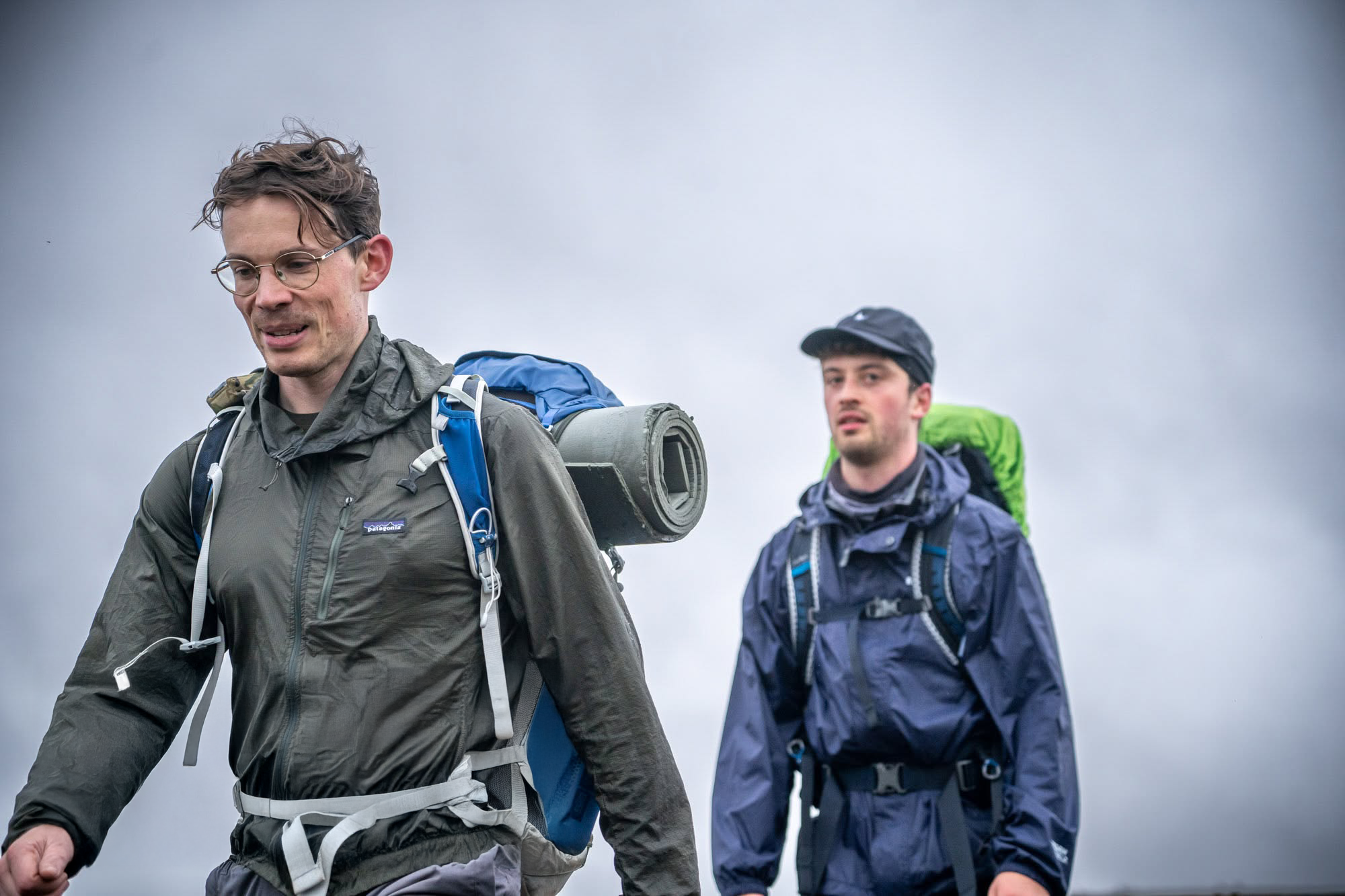
The OMM takes place towards the end of October, so it’s worth remembering that the weather can be just as much a part of the challenge as the terrain itself. Bright autumn sunshine, heavy rain, strong winds and even snow on the higher ground are all possibilities, sometimes within the same weekend.
Rather than avoiding bad weather, use it as part of your training. Running in less-than-perfect conditions helps you understand how your clothing performs, when you need to add or remove layers and how your body responds when it’s cold, wet or windy. It also gives you confidence that, whatever race weekend brings, you’ve already experienced something similar.
Make sure you train in the kit you intend to race with too. A lightweight waterproof such as the Kamleika Jacket is designed to move comfortably with you while still providing protection when the weather turns, while an insulating layer like the Core Hoodie offers excellent warmth for very little weight, either whilst you run or around camp. The more familiar you are with your kit before race weekend, the less you’ll have to think about it when the conditions change.
Build specific strength
Strength training doesn’t need to be complicated, but it can make a noticeable difference when you’re spending two days carrying a pack across uneven ground.
Single-leg exercises such as split squats, step-ups and single-leg RDLs develop the strength and stability needed for technical terrain, while core work helps you maintain good posture when carrying extra weight for long periods.
A stronger trunk allows your arms and legs to work more efficiently, reducing unnecessary movement through your torso and helping you stay comfortable as fatigue builds.
For many people, the OMM is unlike anything they’ve done before. It’s not just a running event, and it’s not simply a case of being fit enough to cover the distance. You’re carrying your own kit, navigating across the hills, looking after yourself for two days and making decisions when you’re already tired.
That’s what makes it such a rewarding challenge, but it also means your training needs to reflect the demands of the event.
You don’t need to become an elite mountain runner before entering the OMM. What you do need is to prepare for the things that make it unique. The more closely your training resembles race day, the more confident you’ll feel when you find yourself out on the hill with a map in one hand and a rucksack on your back.
Train as a team
One of the biggest differences between the OMM and most other running events is that you’ll be tackling it as a pair.
Running together sounds simple enough, but it’s worth spending plenty of time training alongside your partner before race weekend. You’ll quickly learn how each other moves over different terrain, who naturally sets the pace on the climbs and how you communicate when you’re both getting tired.
It’s also a good opportunity to practise the practical side of racing together. Think about how you’ll organise your kit between you so that everything you need during the day is easy to access. A simple example is nutrition. Rather than each runner carrying their own food, pack your bags so your partner can easily reach their nutrition from your pack, and vice-versa while you’re both moving. That way, instead of stopping to access your own nutrition, you can simply grab it from their pack without either of you stopping or taking your rucksack off. The same goes for putting on or taking off extra layers. It might seem like a small detail, but staying on top of your fuelling and clothing becomes much easier when you’ve built it into the way you work together. The same applies to anything else you may need regularly throughout the day, such as poles or spare gloves, which are worth packing where they’re quick and easy to reach.
Training together also helps you settle on a realistic pace. On race day, there’s very little point in one runner constantly waiting for the other. Finding a rhythm that works for both of you is far more valuable than discovering who’s strongest halfway through a training run.
Build your training around the demands of two days
A mountain marathon isn’t simply one long race. It’s two demanding days with an overnight camp in between, and your training should reflect that.
Back-to-back long runs are one of the best ways to prepare. They don’t need to be huge every weekend, but occasionally running for several hours on Saturday before heading back out on Sunday teaches your body to keep moving while carrying accumulated fatigue.
You can even use each day slightly differently. One run might focus on sustained climbing and descending, while the second takes in rougher terrain where you’re constantly adjusting your footing. Not only does this prepare you physically, but it also gives you a chance to practise recovering overnight, eating well and starting again the following morning.
There are mental benefits too. Most people have never deliberately started a long run on tired legs, so it can feel uncomfortable the first few times. By introducing back-to-back training days, you learn that feeling a little stiff or fatigued doesn’t necessarily mean you’re incapable of performing well. It gives you confidence that when you wake up in the tent on day two feeling less than fresh, you’re experiencing exactly what you’ve already rehearsed in training. That familiarity can remove a lot of unnecessary doubt on race weekend.
Think about time on your feet, not just miles
Runners often judge a training run by how many miles they’ve covered. For the OMM, the amount of time you’re moving is often far more relevant.
A four-hour outing over rough ground with plenty of climbing can be considerably more demanding than a much longer run on flat roads and trails. Steep climbs will often be walked, technical descents require concentration and navigation naturally slows your progress.
Don’t worry if your average pace looks slower than usual. The aim is to prepare for the time you’ll spend on your feet during the event, not chase a particular pace on your watch.
Train on the terrain you’ll actually race on
Fitness is only part of the picture. Being conditioned to moving efficiently across rough ground can make just as much difference.
Bogs, tussocks, running through ferns, side slopes and loose rock all ask different questions of your body. Every uneven step requires dozens of small adjustments through your feet, ankles, knees and hips to keep you balanced. Those constant corrections rely on stabilising muscles, tendons and your nervous system working together efficiently. The more often you expose your body to this type of terrain, the better it becomes at making those adjustments automatically.
That’s why someone who’s generally fitter isn’t always the fastest mountain runner. A runner with a larger aerobic engine may produce more power, but if every step on rough ground costs them slightly, or a lot more energy because they’re fighting for balance, over-striding or constantly braking, those small inefficiencies soon add up. Meanwhile, someone who has spent years moving across technical terrain will often use less energy with every foot placement, leaving them feeling stronger after several hours on the hill despite being, on paper, the less fit athlete.
If you’re preparing for the OMM this year in Talnotry, Scotland, seek out similar terrain wherever possible. The closer your training resembles race day, the fewer surprises you’ll face.
Don’t leave navigation until the final few weeks
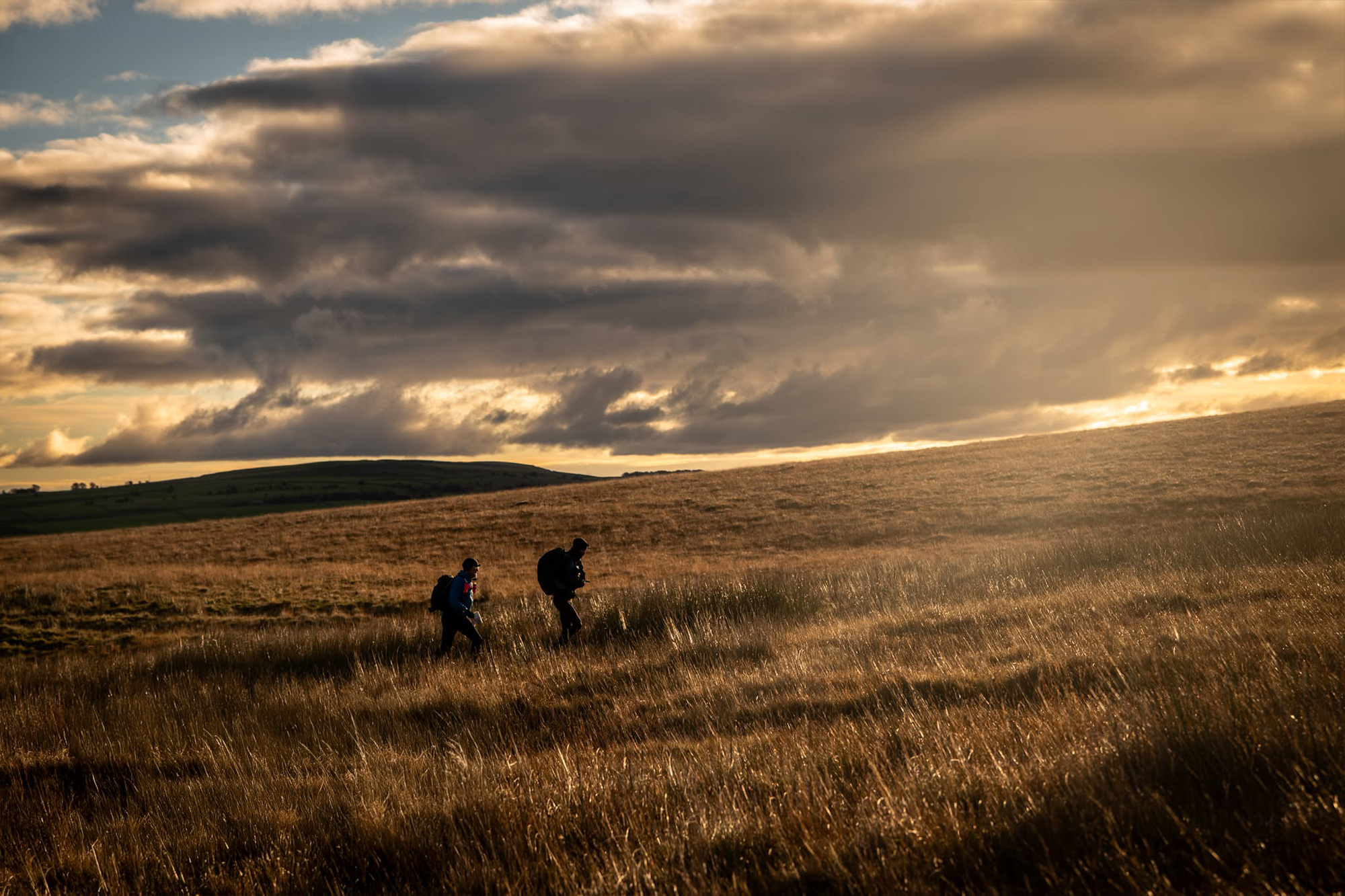
It’s easy to think of navigation as something separate from your running, but in reality, the two should go hand in hand.
One of the best ways to practise is by adding navigation onto the end of your long runs. After two or three hours on your feet, your concentration isn’t quite as sharp and your decision making starts to slow down. That’s much closer to how you’ll feel during the event than if you’re heading out fresh for an hour with a map.
Try leaving the GPS watch behind from time to time and rely on your map and compass instead. Learn to read the shape of the land, recognise catching features and relocate yourself if things don’t quite go to plan. Making the occasional mistake during training is far better than making one during the race.
Always remember to carry your phone with you in case of emergencies, and to fall back on in case things go overly array…
Learn to move efficiently
Success in a mountain marathon isn’t always about moving faster. More often, it’s about wasting less energy.
That might mean shortening your stride on steep climbs instead of forcing the pace, hiking efficiently when walking becomes quicker than running, or relaxing on descents rather than braking with every step.
Small improvements in efficiency soon add up over two days. The more comfortable you become moving through different terrain, the less energy you’ll spend fighting against it.
Train with the pack you’ll race with
Race day shouldn’t be the first time you put your full kit into your rucksack.
As your event gets closer, start introducing your pack on longer training runs and gradually build up to carrying your full mandatory kit. Not because it’s particularly heavy, but because even a relatively light load changes how you move over technical ground.
It’s also worth experimenting with how you pack it. Waterproofs should be easy to reach when the weather changes, while food and drinks need to be accessible without having to unpack half your bag every time you want to eat.
Packs such as the OMM Phantom 25 and the Classic 25 have been designed specifically with mountain marathons in mind. Its close-fitting design keeps the load stable over rough ground, reducing unnecessary movement while you run. Combined with accessible storage, it allows you to eat, drink and retrieve essential kit without constantly stopping to take your pack off. Over two long days, those small efficiencies can make a big difference.
Prepare for all conditions
The OMM takes place towards the end of October, so it’s worth remembering that the weather can be just as much a part of the challenge as the terrain itself. Bright autumn sunshine, heavy rain, strong winds and even snow on the higher ground are all possibilities, sometimes within the same weekend.
Rather than avoiding bad weather, use it as part of your training. Running in less-than-perfect conditions helps you understand how your clothing performs, when you need to add or remove layers and how your body responds when it’s cold, wet or windy. It also gives you confidence that, whatever race weekend brings, you’ve already experienced something similar.
Make sure you train in the kit you intend to race with too. A lightweight waterproof such as the Kamleika Jacket is designed to move comfortably with you while still providing protection when the weather turns, while an insulating layer like the Core Hoodie offers excellent warmth for very little weight, either whilst you run or around camp. The more familiar you are with your kit before race weekend, the less you’ll have to think about it when the conditions change.
Build specific strength
Strength training doesn’t need to be complicated, but it can make a noticeable difference when you’re spending two days carrying a pack across uneven ground.
Single-leg exercises such as split squats, step-ups and single-leg RDLs develop the strength and stability needed for technical terrain, while core work helps you maintain good posture when carrying extra weight for long periods.
A stronger trunk allows your arms and legs to work more efficiently, reducing unnecessary movement through your torso and helping you stay comfortable as fatigue builds.
Build specific strength
Strength training doesn’t need to be complicated, but it can make a noticeable difference when you’re spending two days carrying a pack across uneven ground.
Single-leg exercises such as split squats, step-ups and single-leg RDLs develop the strength and stability needed for technical terrain, while core work helps you maintain good posture when carrying extra weight for long periods.
A stronger trunk allows your arms and legs to work more efficiently, reducing unnecessary movement through your torso and helping you stay comfortable as fatigue builds.
Remember there’s more to the event than running
If you’ve never done an overnight mountain marathon before, spend some time getting familiar with the camp routine as well.
Practise putting your tent up when you’re tired. Cook the meal you intend to take. Work out how you’ll organise your kit so you’re not searching for things in the dark. None of these jobs are difficult, but they all become quicker and less stressful if you’ve done them before.
The OMM isn’t simply about covering ground between checkpoints. It’s about being self-sufficient, making good decisions and looking after yourself over two days in the hills.
Prepare for those demands, rather than simply the distance, and you’ll arrive on the start line ready to enjoy everything that makes the event so special.
If you have a story to tell, whether it’s from the OMM, another race or challenge or just how you use our kit, get in touch! Just pop an email to marketing@team-ark.com and who knows, you might just earn yourself some free kit!
More Like this
Could You Go for 24 Hours? Inside the Inaugural Grasmere 24hr Ultra with Team OMM
What is it really like to race for 24 hours? From running through the night to overcoming injuries and fatigue, Team OMM shares their experience from the inaugural Grasmere 24hr Ultra and explains why the event is about far more than simply covering miles.